Nurturing Nature by Nessa
Monstera Adansonii Care Guide
NO GREEN THUMB NEEDED
Hey plant bestie!
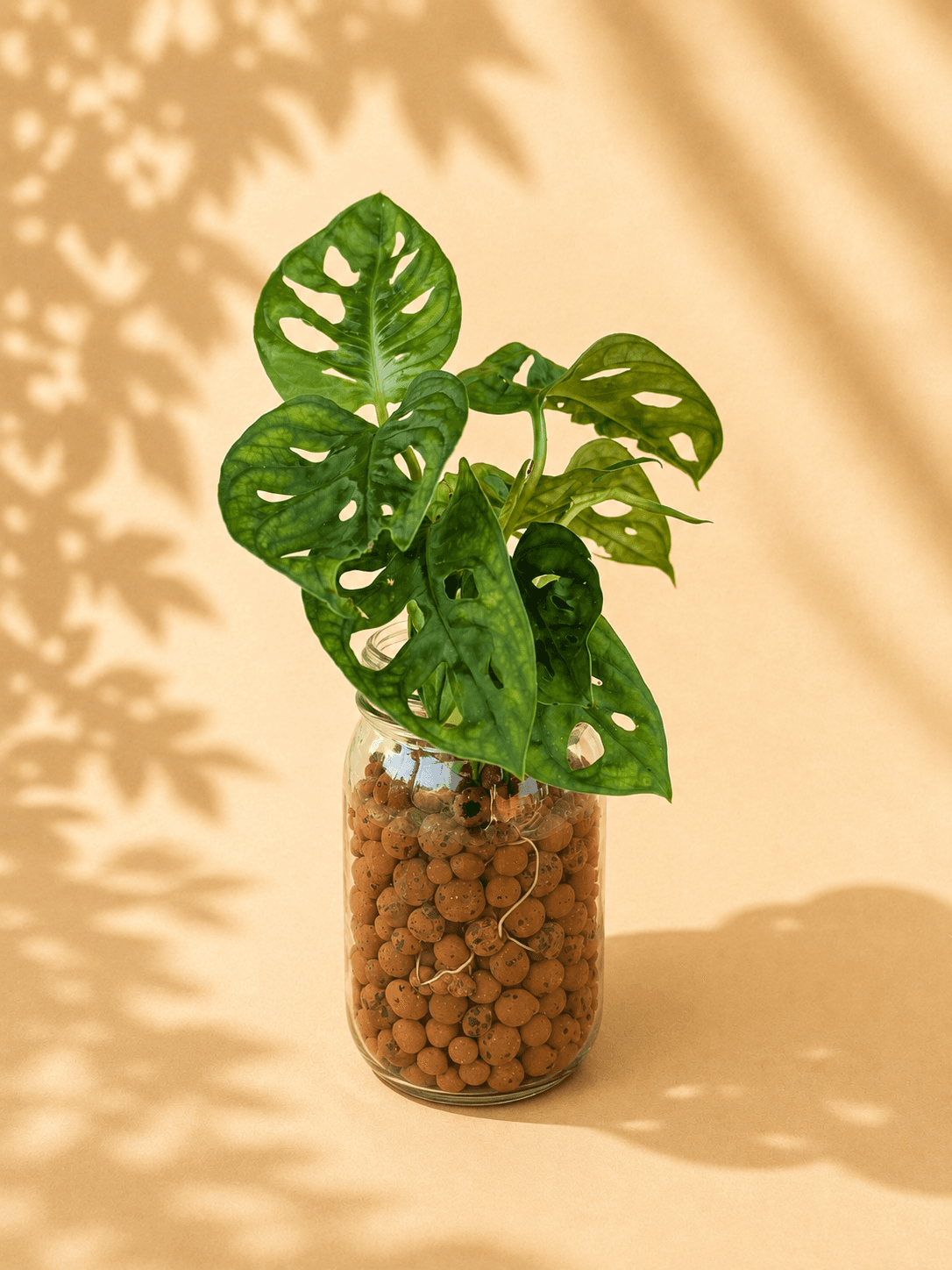
Meet the Monstera adansonii, aka the Swiss Cheese Monstera. Low-key one of the cutest vines out there. This guide covers her (and Monsteras in general!): lighting, humidity, watering, and how to help her grow big, beautiful leaves. No stress, we got you.
Download the PDFWatering
Good news first: the monstera isn’t picky about watering. Like, at all.
The sweet spot? Refill the reservoir to about 2/3rds of the way up. That lets the top of the roots breathe. It might mean watering a little more often, though, and we’re here for an easy plant. So aim to leave at least 2 inches of space between the water level and the LECA level.
LECA balls looking extra dry? You can fill the reservoir higher. You’ll know they’re really dry when they look much lighter in color than usual.
Quick clarification: when I say fill it up to the top, I don’t mean all the way to the rim. She still needs some breathing room. Most importantly, make sure the emerging vine isn’t sitting underwater. That raises the risk of root rot, and nobody wants that.
As a general guideline, you’ll refill the reservoir about every 10 days. But every plant’s environment is different, and so is how fast she drinks. So watch the water level, not the calendar. And that condensation on the glass? It’s telling you a lot.
What if my glass isn’t see-through? Easy. Tip your glass to the side. If the balls fall out before the water comes to the top, it’s time to fill up. Over time you’ll learn your Monstera’s temperament and get closer to a real watering schedule. Iykyk.
Humidity
Monsteras love higher humidity, especially when they’re pushing out new leaves. But no stress: the adansonii can totally handle normal household humidity too.
How do you know if she wants a little extra moisture in the air? Watch the leaves. Crispy edges = she’s probably asking for more humidity.
The easiest fix is a humidifier. Give her that little extra tropical treatment. She deserves it.
Lighting
Let’s be real: lighting is non-negotiable.
The adansonii thrives in bright, indirect light and will struggle in low light. If she’s not getting enough, her overall health and look will show it.
Think bright, but not harsh. Skip the intense, direct sunlight. It can scorch the leaves.
And rotate her every so often! That keeps the growth even in all directions, instead of her leaning dramatically toward one window. Main character energy, but make it balanced.
Growth & Climbing Support
Monsteras are natural-born climbers, and they do better with something to grow on.
Sure, you can let her trail downward and she’ll still grow. But if you want her bigger and more vigorous? Give her something to climb.
Every type of support has pros and cons, but honestly, it doesn’t matter that much as long as she’s growing upward. In a smaller semi-hydroponic setup, copper wire is the best option for her to trail up. Or try plant clips against the wall to secure her. In a bigger setup (soil or semi-hydroponic), a moss pole works too. Give a climber something to climb and the glow-up is real.
Troubleshooting
Is your Monstera looking a little questionable? Don’t panic just yet. Here are some common issues to watch for, plus how to figure out what might be going on.
Rootbound
If the roots start growing in a circular pattern around the bottom of the glass, she may be rootbound. When the roots run out of room, it may be time to give her a bigger home. New apartment era!
Root Rot
The biggest warning sign of root rot? The smell. Healthy roots smell earthy. If you notice a foul or unpleasant odor, something may be off, so it’s time to check the roots and the water.
When watering, leave some space between the top of the LECA balls and the water level. Keeping the water around the two-thirds level of the cup is a good general guideline, as long as the roots can still reach the moisture they need.
Yellowing Leaves
Yellow leaves are her way of saying something might not be right. The good news? It’s not the end of the world.
First, remove the yellowing leaves. Then run through this checklist to find the possible cause:
- Lighting
- Rootbound conditions
- Root rot
- Lack of nutrients
And if she’s been completely dry for a few days and starts yellowing? Let’s just be real: she’s just thirsty.
Give her the care she needs and keep an eye on her recovery. With the right conditions, she may bounce back and grow new leaves. We’re rooting for you (pun intended).
Algae & Debris Buildup
First things first: algae buildup is mostly an aesthetic thing, not a direct threat to your plant.
For light buildup, flush the system with comfortably warm water. Think warm bath, not boiling hot spring. We’re treating our Monstera like the baby she is!
Algae being stubborn? Remove the plant, move the LECA into another container, and wash the original vessel before putting everything back together. Fresh start vibes.
Burnt or Dark Leaves
Crispy leaf edges can mean she needs more humidity. But if you see burn marks or dark patches across the leaves, especially in circular patterns or concentrated areas, humidity may not be the culprit.
If she’s getting bright, indirect light and still developing these marks, take a closer look at the water you’re using. Using a nutrient solution? Make sure it’s suitable for hydroponic growing and that you’re monitoring the pH. Using plain water? She might do better with filtered water.
The plot twist: sometimes the issue isn’t where your plant is sitting. It’s what’s going into the water she drinks.